




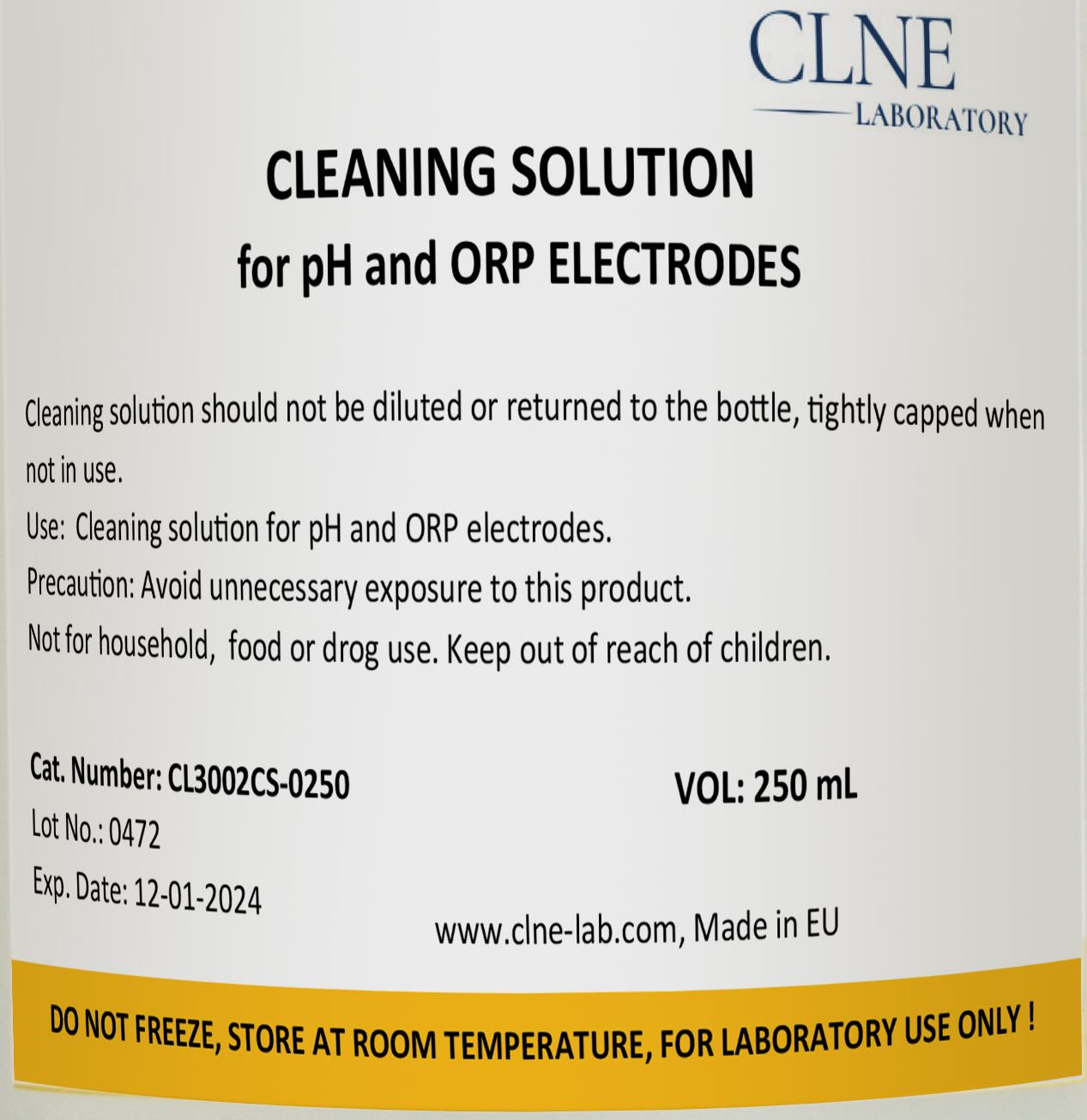
CLNE cleaning solutions are specially formulated for cleaning electrodes for both general and specific purposes, such as against contamination, algae, fungi or bacteria during measurements.
CLNE is a general purpose cleaning solution that can be used for a wide range of applications. Electrodes can become contaminated during use and give inaccurate results, even when read correctly in pH buffer.
CLNE's cleaning solutions remove impurities and residues that remain on the surface of electrodes when they are immersed in samples during measurement or when they are stored incorrectly. CLNE recommends that you clean the electrode sphere surface and membrane regularly to keep the probe clean and avoid clogging the membrane.
Why do I need an electrode disinfectant solution?
The most common cause of pH measurement inaccuracy is an electrode that is not clean or not properly cleaned. This is very important to recognise because during calibration the instrument assumes that the electrode is clean and the standardisation curve generated during the calibration process remains a valid reference until the next calibration. pH meters on the market today allow for an offset voltage of approximately ±60 mV. A deviation from 0 mV is not unusual, but ideally should not be greater than ±30 mV. The calibration process compensates for the variation in offset voltage. If the mV offset continues to deviate and the meter is calibrated with a dirty electrode, an inaccurate reading will result.
Over time, during use, the particles present may deposit on the sensor surface of the electrode. Incorrect use and expired solutions can also cause a similar failure.
Using the electrode cleaning solution
Before calibration, it is important to clean the electrode properly to ensure accurate measurement. Cleaning the electrode sensor in a clean and fresh solution ensures accurate calibration.
Cleaning is a quick and efficient routine that should be performed regularly to remove electrode contamination and avoid clogging the junction. Simply immersing the electrode in CLNE cleaning solution for 15-20 minutes will dissolve mineral deposits or other unwanted coatings.
Cleaning the electrode
The most common cause of inaccurate measurements is a contaminated or improperly cleaned electrode. It's important to remember that just because an electrode looks clean, it may still have dirt on it that is not visible to the eye. However, deposits on the sensor sphere can significantly affect calibration and measurement accuracy and stability. The primary signs of electrode fouling may be fluctuating readings, calibration anomalies (i.e. not calibratable) or slow stabilisation of the measurement.
Check the condition of the electrode frequently. If there are scratches or cracks on the surface of the electrode (especially on the sensor sphere), the electrode should be replaced.

Click
Storing the electrode cleaning solution
Bottles containing CLNE cleaning solutions are hermetically sealed to ensure quality. Expiry date and batch number are always indicated on the solution storage bottle. Store the solution protected from light at room temperature to ensure guaranteed quality, do not freeze the solution.
Professional cleaning of the electrode
1. Rinse the electrode with deionised water
Before immersing the electrode in the calibration solution, rinse thoroughly with deionised water to avoid contamination of the calibration solution. The electrode should always be rinsed before immersion in any solution and after removal from the solution. Deionised water is recommended for rinsing the electrode, but distilled water or even tap water may be used.
2. Use fresh buffer solutions for calibration
Your calibration will be as accurate as the calibration buffer solutions you use. Solutions below pH7 should be used within 3 months of opening, solutions above pH7 will retain their quality for 1 month.
To avoid contamination of the solutions, the electrode should not be immersed directly into the bottle or the used solution poured back into the bottle. If the same solution is to be used for several calibrations, it is advisable to fill it into a sealable container. The solution in the container should be changed regularly, daily or weekly depending on the use. Solutions in pouches contain enough solution for one calibration and are ready to use, making them ideal for calibration in the field.
It is important to note that basic buffer solutions (i.e. those with pH 7.01 and above) are less stable than acidic solutions. This is due to atmospheric carbon dioxide diffusing into the solution. In the case of long standing, filled solutions, the actual value may be lower than the nominal value of the solution, resulting in inaccurate calibration (hence measurement).
3. Cleaning the electrode
To clean, immerse the tip of the electrode in CLNE's general cleaning solution for 15-30 minutes. Depending on the area of application of the electrode, the nature of the dirt and deposits can vary. To remove different types of contamination, a cleaning solution appropriate to the nature of the contamination should be used.
After the cleaning process, the electrode should be rinsed thoroughly with deionised water and soaked in CLNE storage solution for at least 2-3 hours prior to measurement. Then calibrate the electrode and start the measurement. For best results, the electrode can be left in the storage solution overnight.